
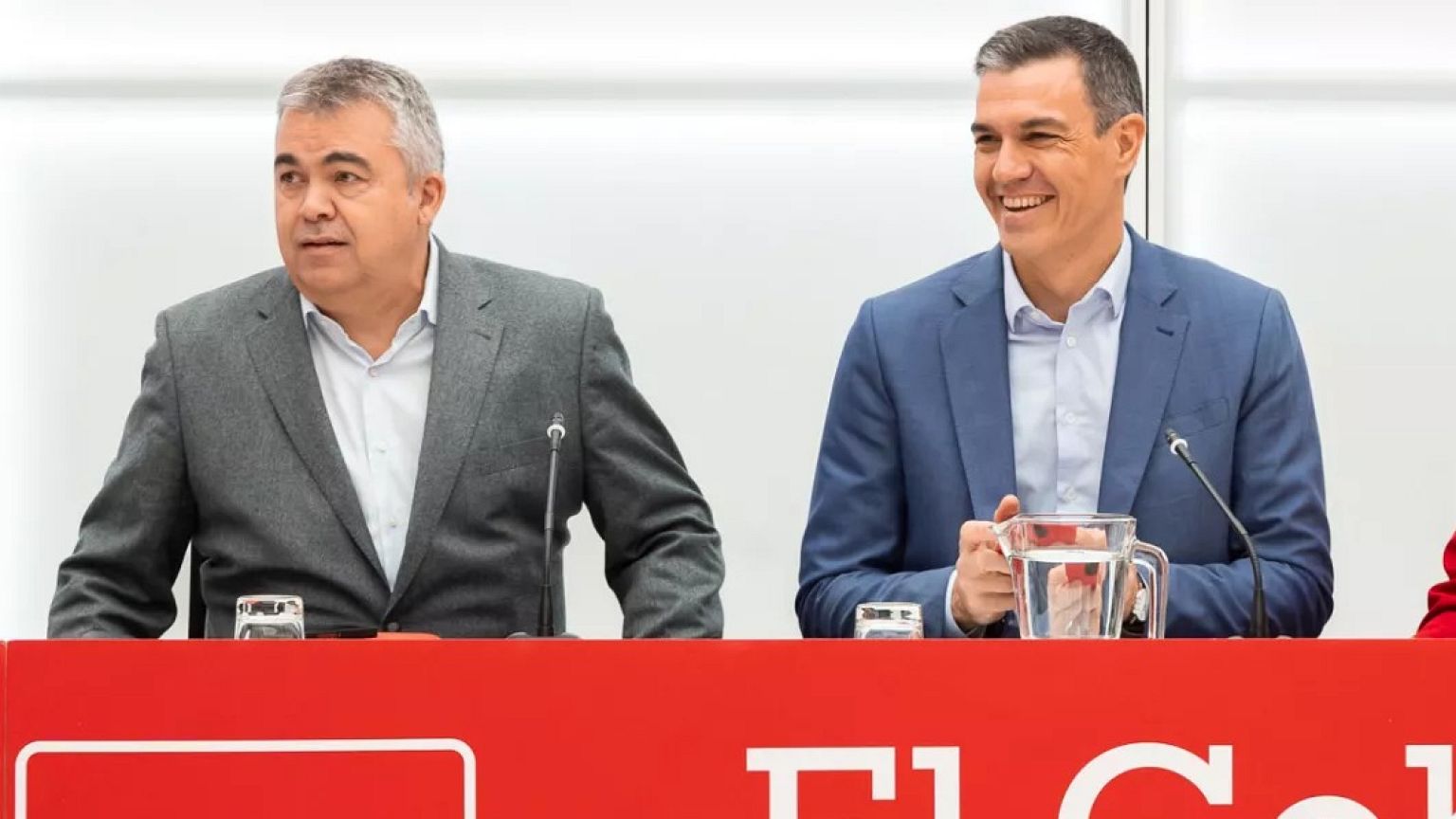
The Spanish Prime Minister, Pedro Sánchez, is facing the most serious political storm of his tenure. A damning report by the Guardia Civil’s Central Operative Unit (UCO) has linked key PSOE officials to a multimillion-euro bribery scheme involving public contracts and corporate kickbacks. As this investigation implicates the party’s top leadership, Sánchez finds himself increasingly isolated—not only by the scandal but by the growing number of corruption cases surrounding his own family.
The UCO Report: A Direct Connection to the Party’s Heart
The UCO document reveals an intricate scheme of illegal transactions managed by Santos Cerdán, who was the Secretary of Organization for the PSOE until not long ago, and carried out with the help of individuals linked to ex-minister José Luis Ábalos. Based on the findings, construction company Acciona provided at least €620,000 in kickbacks to secure preferential conditions in government bids, along with an additional €450,000 in outstanding payments related to current agreements.
Importantly, the UCO describes how these activities were not on the periphery but were orchestrated from the core of the party’s hierarchy. The corruption was not a coincidence—it was entrenched.
A President Surrounded
While the UCO’s discoveries are making news, Sánchez is facing two more cases, both concerning his close relatives:
- Begoña Gómez, his wife, is under formal investigation for alleged influence peddling, embezzlement of public funds, and corruption in business. The probe centers on her role in promoting private companies from her university position, which allegedly received favorable treatment from the administration.
- David Sánchez, the Prime Minister’s brother, is facing trial for prevarication and influence peddling linked to a position created for him within the Provincial Council of Badajoz. Judicial authorities claim the job was tailored specifically for him, bypassing competitive procedures and justified only by political convenience.
Institutional Erosion and Political Cost
As Sánchez keeps publicly disassociating himself from these controversies, the political repercussions are becoming increasingly difficult to overlook. Cerdán’s resignation, who was once seen as one of Sánchez’s closest confidants, has impacted the party’s morale significantly. At the same time, public confidence in government transparency has significantly declined, with opposition parties demanding a comprehensive parliamentary inquiry and, in some instances, early elections.
Some detractors claim that the Prime Minister’s lack of commentary, along with his continuous calls for legal procedures, is no longer adequate. The accumulation of corruption cases—encompassing corporate, familial, and institutional spheres—has led to the belief that Sánchez either lacks the desire or the capability to manage the abuse of governmental authority in his vicinity.
A Narrative in Collapse
Pedro Sánchez built much of his political narrative on the promise of ethical governance, modernization, and democratic regeneration. Yet today, he is the first head of government in democratic Spain to see both his spouse and his brother simultaneously under judicial scrutiny, while his closest political lieutenants face allegations of industrial-scale bribery.
What once looked like isolated cases now appear as pieces of a broader pattern: public institutions leveraged for personal and political gain. Whether through contracts tailored to major corporations, public roles customized for family members, or influence channeled through academic institutions, the scandals now encircle the presidency.
The UCO report has not only unveiled a corruption web—it has also demonstrated how intertwined it was within the structures of the governing party. Along with the increasing legal issues encountered by his wife and brother, Pedro Sánchez is now at the helm of a government clouded by doubt.
The issue now is not about isolated criminal acts, but about whether an environment of privilege and self-preservation has prospered during his leadership. The upcoming weeks might reveal if Spain’s democratic structures can handle the crisis—or if internal corruption has weakened the system itself.


