

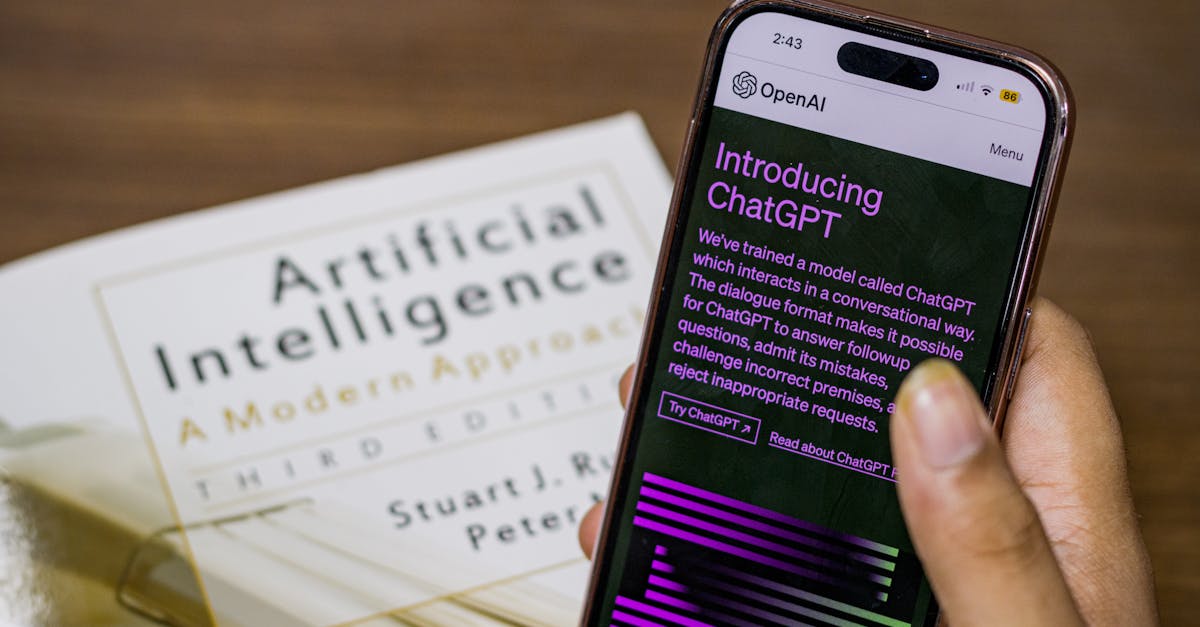
AI agents have moved far beyond experimental projects in research labs, becoming practical and scalable elements in day‑to‑day business workflows, and their swift expansion across sectors is fueled by technological maturity, economic pressures, organizational demands, and a growing cultural readiness for automation, all of which are collectively transforming how work is structured, carried out, and refined.
Advancement and Refinement of Fundamental AI Technologies
One of the primary forces accelerating AI agent adoption is the remarkable progress in core technologies, as enhancements in large language models, machine learning frameworks, and reasoning architectures have shifted AI agents from fragile automation tools to versatile and responsive digital workers.
Modern AI agents are capable of:
- Understand unstructured data such as emails, documents, chats, and voice transcripts
- Reason across multiple steps to complete complex tasks
- Interact with software tools, databases, and APIs autonomously
- Learn from feedback and improve over time
The availability of reliable cloud-based AI platforms has also reduced the cost and complexity of deployment. Businesses no longer need deep in-house AI expertise to implement capable agents, accelerating experimentation and adoption.
Pressure to Increase Productivity and Reduce Costs
Global economic uncertainty and competitive markets are pushing organizations to do more with fewer resources. AI agents offer a compelling answer by handling repetitive, time-consuming, and high-volume tasks at a fraction of the cost of human labor.
Typical instances include:
- Customer support agents who handle routine requests at all hours
- Finance agents who balance accounts, identify irregularities, and produce reports
- Sales operations agents who refresh CRM platforms and assess leads automatically
Industry analyses indicate that effectively implemented AI agents can cut operational expenses across specific functions by roughly 20 to 40 percent, while also boosting the speed and uniformity of responses, a mix that makes the return on investment straightforward for executives to defend.
Transition from Automating Tasks to Orchestrating Workflows
Earlier forms of automation handled individual activities like entering information or executing predefined rules, while AI agents now mark a transition toward coordinating full workflows that span multiple platforms and teams.
Instead of simply executing instructions, AI agents can:
- Monitor triggers and events across multiple tools
- Decide what action to take based on context
- Coordinate handoffs between humans and machines
- Escalate exceptions when judgment or approval is required
For example, within procurement, an AI agent might detect a looming supply shortfall, assess substitute vendors, solicit pricing, craft a recommendation, and forward it for approval, and this end-to-end functionality greatly amplifies the impact of automation.
Integration with Existing Business Software
Another significant force behind this expansion comes from how smoothly AI agents are being woven into widely adopted enterprise platforms, with CRM systems, ERP tools, help desk software, and collaboration suites now offering more deeply embedded AI features.
This tight integration means:
- Lower disruption to existing workflows
- Faster user adoption due to familiar interfaces
- Improved data access and accuracy
- Reduced implementation risk
When AI agents operate inside the tools employees already use, they feel less like replacements and more like intelligent assistants, which improves organizational acceptance.
Building Confidence by Enhancing Precision and Strengthening Governance
Early doubts about AI’s dependability and potential risks initially hindered adoption, but recent gains in model precision, oversight, and governance structures have largely dispelled those concerns.
Businesses are now implementing AI agents furnished with:
- Human-in-the-loop controls for sensitive decisions
- Audit trails that log actions and reasoning steps
- Role-based permissions and data access limits
- Performance metrics tied to business outcomes
As organizations grow more assured in handling risk, they become increasingly prepared to entrust significant duties to AI agents, which in turn hastens their adoption throughout various departments.
Workforce Transformation and Talent Constraints
Shortages of talent in fields like data analysis, customer support, and operations serve as another driving force, and AI agents step in to bridge these gaps when recruitment proves slow, costly, or challenging.
Rather than replacing employees outright, many companies use AI agents to:
- Offload routine work so humans can focus on higher-value tasks
- Support junior employees with real-time guidance
- Standardize best practices across teams
This cooperative approach meets contemporary workforce expectations while easing potential resistance during adoption.
Competitive Pressure and Demonstrated Success Stories
As early adopters report measurable gains, competitive pressure intensifies. When one company shortens sales cycles, improves customer satisfaction, or accelerates product development using AI agents, others are compelled to follow.
Examples from retail, finance, logistics, and healthcare illustrate how AI agents function:
- Cutting the time it takes to reply to customers from several hours down to mere seconds
- Boosting the precision of forecasts while accelerating inventory rotation
- Raising workforce productivity without adding new hires
These visible successes turn AI agents from a strategic experiment into a perceived necessity.
A Broader Shift in How Work Is Defined
At a deeper level, the growth of AI agents reflects a change in how organizations think about work itself. Tasks are no longer assumed to require a human by default. Instead, leaders ask whether an activity should be handled by a person, an AI agent, or a hybrid of both.
This mindset fosters ongoing refinement of workflows, viewing AI agents as adaptable, scalable partners instead of static instruments, and as this view gains traction, its adoption increasingly fuels itself.
The swift rise of AI agents within business operations is not propelled by any single innovation or fad; instead, it stems from intersecting progress in technology, economic viability, organizational trust, and structural strategy. As companies increasingly treat intelligence as a capability woven directly into their workflows, AI agents are emerging as a seamless extension of everyday operations, subtly reshaping productivity, responsibilities, and competitive positioning all at once.