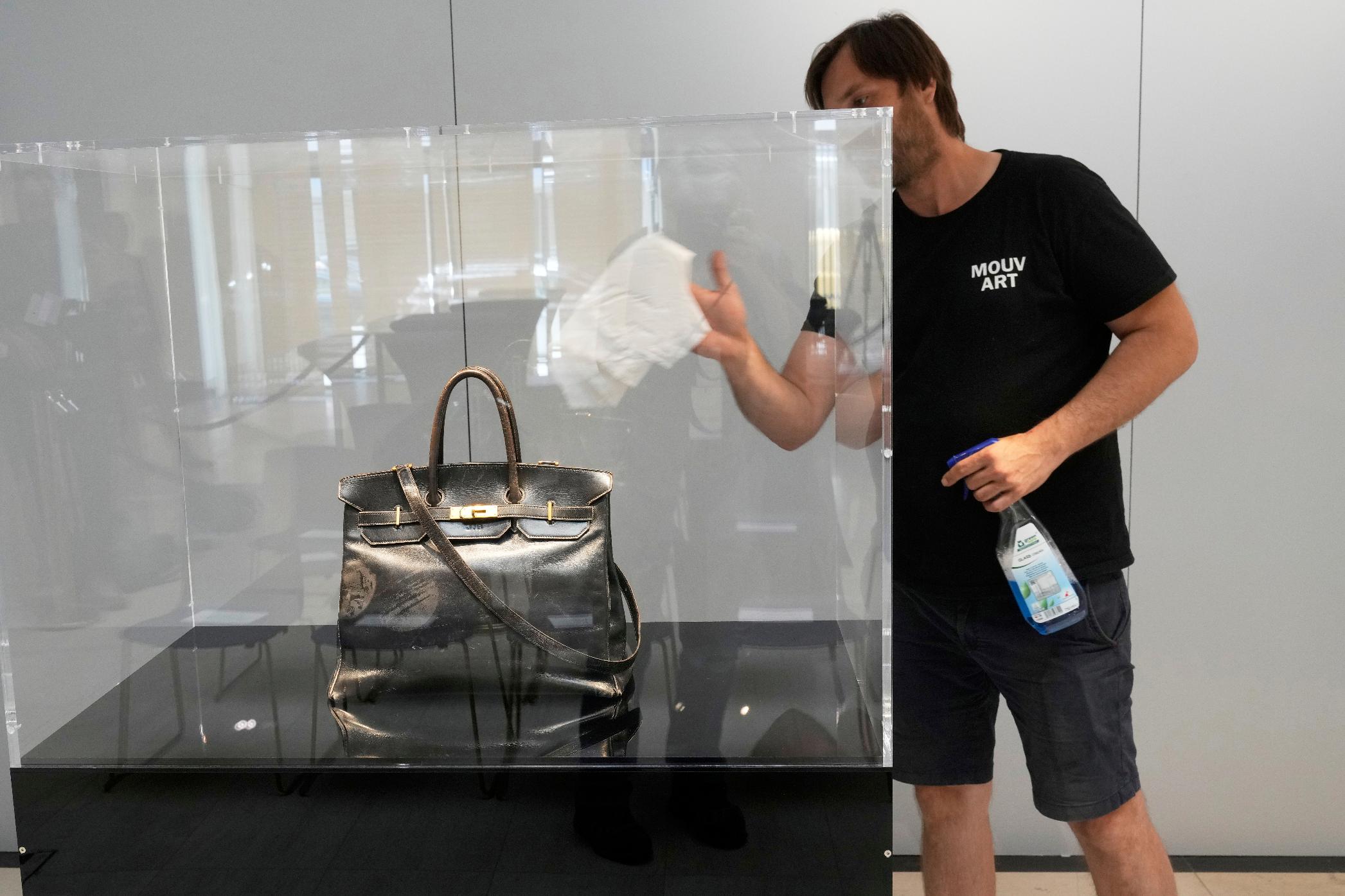
In a moment that has captivated the worlds of fashion, celebrity culture, and luxury collectibles, the original Hermès handbag that belonged to the late British-French actress and singer Jane Birkin has been sold at auction for an astonishing $10 million. This extraordinary sale not only sets a new record for the most expensive handbag ever sold but also highlights the enduring influence of Birkin’s legacy and the cultural significance of the bag that bears her name.
Jane Birkin, whose effortless style and artistic contributions made her an icon on both sides of the English Channel, is forever linked to the legendary Hermès Birkin bag, one of the most coveted fashion accessories in the world. The creation of this handbag is rooted in a chance encounter between Birkin and Jean-Louis Dumas, the former chief executive of Hermès, on a flight in the early 1980s. Frustrated with the impracticality of most handbags for a working mother, Birkin sketched her idea for the perfect bag, leading to the birth of the now-famous design.
The particular bag that recently went under the hammer was not just any Birkin—it was Jane Birkin’s personal handbag, which she carried and used for years. This unique connection to the woman who inspired its creation imbued the item with an aura of authenticity, history, and celebrity that proved irresistible to collectors and fashion enthusiasts alike. The final sale price of $10 million surpassed all expectations, underscoring the cultural and monetary value attached to items with such rare provenance.
The auction, which attracted global attention, saw fierce bidding from collectors, investors, and fashion houses, all vying for the opportunity to own a piece of fashion history. While luxury handbags frequently fetch high prices at auction, with rare Hermès models such as the Himalayan Birkin regularly commanding six-figure sums, this sale marks an entirely different level of prestige and significance.
The record-breaking price can be attributed to several factors beyond the bag’s association with Jane Birkin. The Birkin bag itself has long been regarded as the ultimate symbol of sophistication, craftsmanship, and exclusivity. Each Birkin is handcrafted by skilled artisans using the finest leathers, with meticulous attention to detail that reflects Hermès’ heritage of excellence. Owning a Birkin has become not only a fashion statement but also a status symbol, with waiting lists for new bags often stretching for years.
However, this particular handbag’s value was elevated by its intimate link to Birkin’s personal story. Unlike pristine, untouched bags that remain locked away in collectors’ safes, Birkin famously used her own handbags without pretense. She adorned them with stickers, keychains, and charms, allowing them to wear and age naturally. This approach made her Birkins uniquely personal and imbued them with character that set them apart from the untouched luxury items often associated with the brand.
The handbag sold at auction bore the marks of this authenticity. Signs of wear, personalization, and years of use told a story of a life lived fully and without artifice—a reflection of Birkin herself, who was admired for her authenticity, charm, and understated glamour. It is this sense of genuine connection that likely resonated with bidders, making the bag not merely an object of luxury, but a tangible link to a cultural icon.
Jane Birkin’s influence extends far beyond the handbag that carries her name. Her effortless style, often described as the epitome of French chic, has inspired generations of fashion lovers and designers. With her tousled hair, minimal makeup, and androgynous yet feminine wardrobe, she personified a relaxed but sophisticated aesthetic that continues to inform modern fashion trends.
Her collaboration with Hermès, although not officially formalized, has significantly impacted the world of luxury. Initially crafted as a practical accessory for her hectic way of life, the Birkin bag has evolved into one of the priciest and most sought-after handbags globally. Over the years, the desire for Birkins has skyrocketed, with rare and unique models fetching extraordinarily high prices in both the original and resale markets.
The recent $10 million sale is not only a testament to Birkin’s personal charm but also to the shifting perception of fashion collectibles as viable investment assets. In recent years, high-net-worth individuals and investment firms have increasingly turned to luxury handbags, watches, and rare sneakers as alternative investments. Unlike stocks or bonds, these tangible assets carry both aesthetic appeal and the potential for significant appreciation in value, particularly when linked to cultural or historical milestones.
Auction houses have noted an increasing pattern in the prices of high-end goods, with some Hermès handbags gaining value more quickly than conventional assets such as gold or property. The auction of Jane Birkin’s personal handbag exemplifies this change, highlighting where fashion meets investment tactics, and how the narrative of an item can significantly raise its market value.
The transaction also presents intriguing inquiries regarding the influence of celebrity figures in enhancing the appeal of consumer products. Even though the Birkin bag was already regarded as a highly coveted luxury accessory, its direct connection to the woman who inspired it enhanced its prestige to a level that surpasses mere material worth. This phenomenon is similar to how possessions formerly owned by cultural icons like Marilyn Monroe, Audrey Hepburn, or Princess Diana continue to fetch substantial sums because of their sentimental and historical significance.
For enthusiasts of Jane Birkin, the auction is a touching reminder of her impact on style, tunes, and cinema. Despite her passing in 2023, her legacy endures not only via her creative endeavors but also through the classic elegance she personified. The Birkin bag, in many respects, encapsulates the core of her personal ethos—functional yet graceful, opulent yet simple.
El acuerdo de $10 millones también representa cómo el concepto de valor está evolucionando en el mercado de lujo. En una era donde la sostenibilidad, la artesanía y el contar historias son cada vez más valorados sobre meros símbolos de estatus, los objetos con un relato profundo se están volviendo más atractivos. Un bolso que narra la historia de su portadora—una mujer que redefinió la elegancia casual e inspiró a innumerables diseñadores—tiene una profundidad que trasciende las etiquetas de precio.
The name of the successful bidder remains undisclosed, yet there is much conjecture among fashion enthusiasts. Many theorize that the handbag might end up in a museum’s exhibit on fashion history, whereas others think it could be showcased in a high-end brand’s archive or kept in a private collector’s secure storage. No matter where it ultimately resides, the tale of the bag has embarked on a new phase, one that still fascinates fashion lovers across the globe.
The immense media coverage surrounding the sale has also brought renewed attention to the craftsmanship behind every Hermès bag. Each Birkin takes up to 48 hours to create by hand, with artisans trained for years to perfect their craft. This dedication to quality, coupled with the limited production and high demand, explains why the Birkin remains an enduring symbol of luxury.
Additionally, Jane Birkin herself once conveyed ambivalence towards worldwide fascination with the handbag that carried her name. She was known for casually using her bags, at one time requesting Hermès to take her name off the crocodile-skin models because of her apprehensions concerning animal rights. This intricacy brings an additional dimension to the story—the item being both a significant fashion landmark and a representation of the woman’s individual principles, her campaigning, and her genuineness.
As the luxury market progresses, the sale of this specific Birkin highlights the significance of the narratives associated with objects in determining their value. Ownership extends beyond acquiring a unique item; it involves possessing a fragment of history, a link to a cultural icon, and an artifact that bears emotional significance.
For enthusiasts, buyers, and fans equally, the unprecedented auction of Jane Birkin’s original Hermès purse serves as proof of the lasting charm of classic design, personal narratives, and the impactful influence of fashion. It further indicates that within a fast-paced trend-driven market and large-scale manufacturing, there persists a profound respect for artistry, sincerity, and the stories that items hold over the years.
As Jane Birkin’s enduring impact extends beyond fashion to the cultural domain, her famous handbag has solidified its historical significance. It stands not only as an opulent accessory but also as a timeless symbol of elegance, uniqueness, and the remarkable life of the muse behind it.


:max_bytes(150000):strip_icc()/VWH-GettyImages-2168531818-3e0c9a6c46fe445ab049a4daf639baa5.jpg "How To Incorporate Glycolic Acid Into Your Skincare Routine, According To The Experts")